
Written by Bryan Goldman
When organizations decide to modernize their CRM or business processes, one of the most common questions is whether they should use a prebuilt Microsoft Dynamics 365 application like Sales or invest in a custom-built solution using Power Apps.
It’s an important decision with long-term implications for scalability, user adoption, and overall cost.
The good news is that there isn’t a “wrong” choice. There is simply a choice that is more or less aligned with what you’re trying to accomplish. Understanding the strengths of each approach can help you make a decision that works not only today but also as your needs evolve over time.
Making the right platform choice upfront can save significant time and money. It can also reduce frustration for users and administrators. When organizations align their solution with the type of work they are doing, they typically see faster adoption, clearer reporting, and fewer reworks later. This comparison is designed to help you determine whether you should lean into the structure and maturity of Dynamics 365 Sales or the flexibility and precision of a custom Power App.
When Dynamics 365 Sales Makes the Most Sense
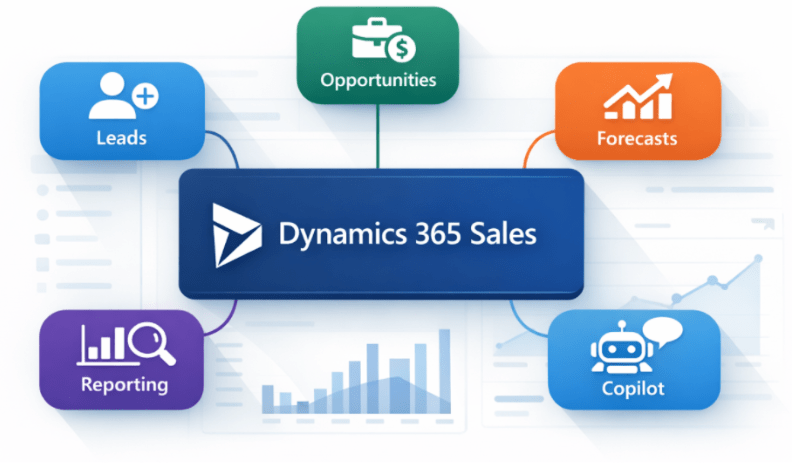
Dynamics 365 Sales is much more than a basic CRM. It is a Microsoft-supported sales platform with best practices built directly into the solution. If your organization runs a true sales process, D365 Sales is often the best place to start.
Teams can qualify leads, manage opportunities, and forecast revenue using capabilities that are already available out of the box. Sales representatives also benefit from native pipeline management, forecasting tools, and integrations with Outlook and Microsoft Teams. These features reduce friction and make it easier to work within existing Microsoft tools.
In addition, Sales Insights and Copilot capabilities continue to add intelligence to the seller experience. They help teams prioritize activities and focus on the opportunities that matter most. These are not features you need to design, build, or maintain. Microsoft provides them as part of the platform and continues to invest in their improvement.
Where Power Apps Shine
While Dynamics 365 Sales excels at standardized sales processes, Power Apps shine when your requirements fall outside traditional CRM patterns.
Custom Power Apps are often the better fit for operational workflows, internal teams, or specialized processes that do not revolve around pipeline management and revenue tracking.
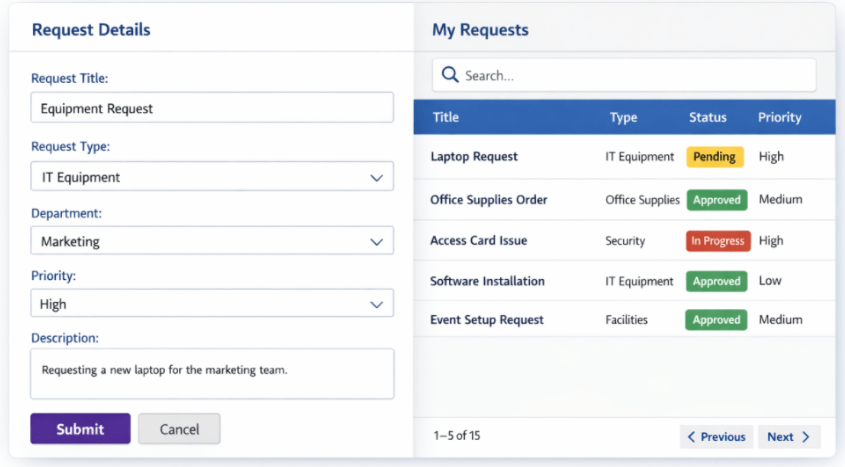
For example, organizations often use Power Apps for internal request management, academic intake processes, approvals, and task-based workflows. In these scenarios, a streamlined application can be more effective than a full CRM platform.
Power Apps allow you to design the experience around the way people actually work. You are not forced to introduce unnecessary entities, fields, or licensing costs. The result is often a solution that feels purpose-built rather than adapted. That simplicity can drive higher user adoption and faster implementation.
A Common Mistake: Building a Sales Solution in Power Apps
One of the most common pitfalls organizations encounter is choosing a custom Power App for what is ultimately a sales problem.
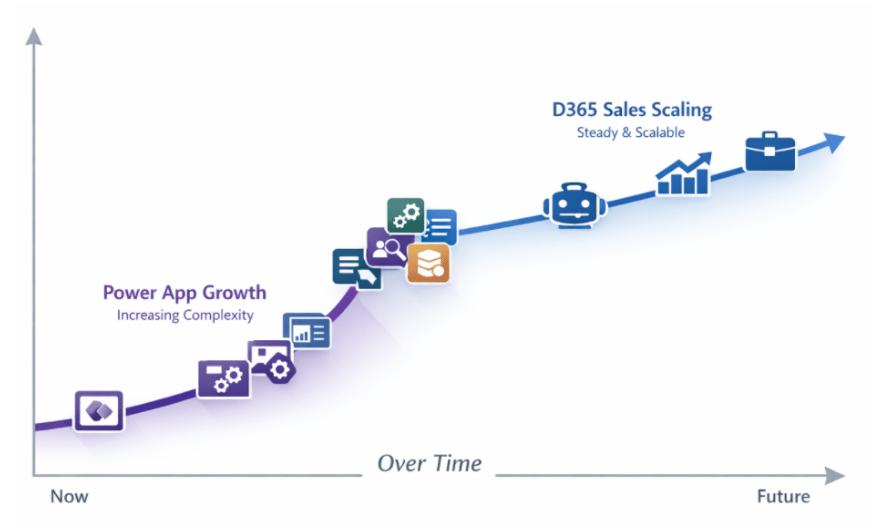
At first, the decision can seem logical. The application is lightweight, inexpensive, and quick to deploy. Over time, however, business requirements tend to expand.
Reporting becomes more important. Leadership wants dashboards. Teams need role-based access controls. Forecasting becomes a requirement. Sales managers want visibility into pipeline performance and quotas.
At that point, organizations often find themselves rebuilding features that already exist natively in Dynamics 365 Sales. The custom solution grows more complex, and maintenance costs increase. In many cases, migrating later becomes more disruptive and expensive than starting with the right platform from the beginning.
If conversations already include pipeline health, sales KPIs, forecasting, or quota management, it is usually worth pausing before committing to a fully custom solution.
How to Choose the Right Platform
A helpful way to approach this decision is to focus on what you are actually trying to model.
If your solution centers on customers, deals, revenue, and forecasting, Dynamics 365 Sales was designed specifically for that purpose. It provides the structure, reporting, and scalability needed to support a mature sales organization.
If your solution focuses on tasks, requests, approvals, or internal business processes, a Power App is often the cleaner and more cost-effective choice. It allows you to build exactly what users need without introducing unnecessary CRM functionality.
Final Thoughts
This decision is not about choosing custom over out-of-the-box functionality. It is about aligning technology with the outcomes you care about most.
Dynamics 365 Sales delivers maturity, structure, and long-term scalability for organizations running a sales operation. Power Apps provide flexibility, focus, and speed for teams that need a tailored solution without CRM overhead.
When used intentionally, both platforms are incredibly powerful. The key is choosing the one that supports where your organization is headed, not just where it is today.