 Written By Stephen Reid
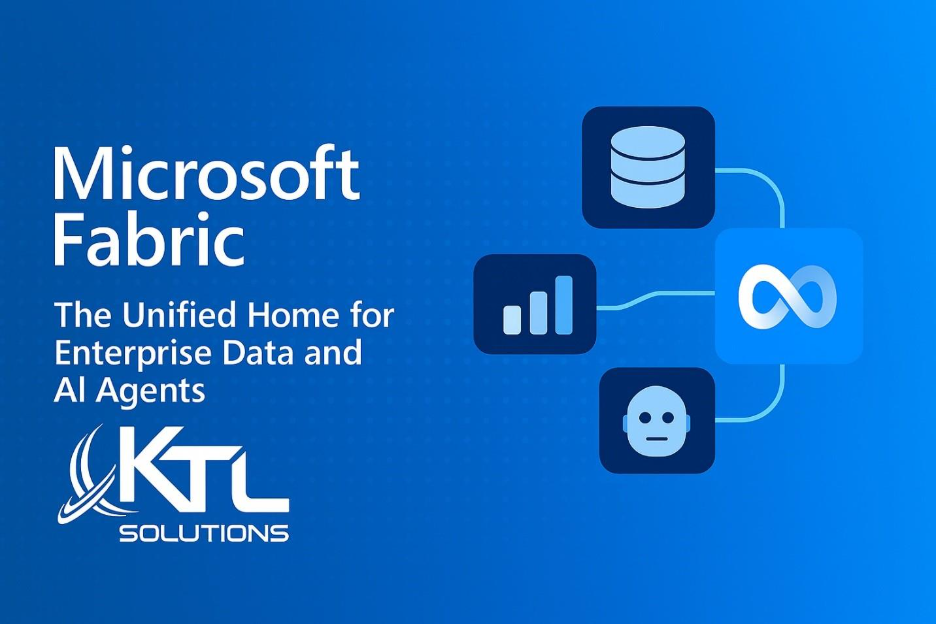
In today’s data-driven world, enterprises are under constant pressure to harness the full potential of their data. Whether it’s improving customer experiences, optimizing operations, or enabling advanced analytics, success depends on a Microsoft Fabric unified data platform that brings everything together. Microsoft Fabric is designed to be the single home for enterprise data, empowering both business users and the AI agents that rely on accurate, governed information.
Why a Unified Data Platform Matters
Modern organizations frequently struggle with fragmented data environments. Data lives across CRM systems, ERP platforms, cloud storage, and on-premises databases. As a result, teams waste time reconciling data, and AI agents often operate on incomplete or outdated information.
A unified data platform solves this problem by consolidating disparate sources into a single, governed environment. This is exactly where the Microsoft Fabric unified data platform excels. It connects data engineering, data science, real-time analytics, and business intelligence in one cohesive ecosystem. Consequently, both humans and AI agents can access trusted data when and where they need it.
What Is Microsoft Fabric?
Microsoft Fabric is an end-to-end analytics platform that integrates multiple services into a single experience. At its core is OneLake, a centralized data lake designed to store all enterprise data in one place.
In addition, Microsoft Fabric supports several key workloads:
- Data Engineering: Build and manage scalable pipelines for ingesting and transforming data
- Data Science: Train, evaluate, and deploy machine learning models directly in the platform
- Real-Time Analytics: Analyze streaming data for immediate insights and actions
- Business Intelligence: Use Power BI to create interactive dashboards and reports
By unifying these capabilities, the Microsoft Fabric unified data platform eliminates the need to manage disconnected tools. Instead, it becomes the single source of truth for enterprise analytics.
Learn more about Microsoft’s vision for Fabric on the official Microsoft site:
https://learn.microsoft.com/fabric
How Microsoft Fabric Empowers AI Agents
AI agents are only as effective as the data they consume. Whether they automate workflows, assist customers, or generate predictive insights, they require reliable, well-governed data.
The Microsoft Fabric unified data platform ensures AI agents benefit from:
- Unified Access: All enterprise data in OneLake is available through a consistent interface
- Built-In Governance and Security: Role-based access, compliance controls, and data lineage are applied by default
- Scalability: Fabric scales automatically as data volumes and AI workloads grow
- Real-Time Insights: Streaming data enables agents to make proactive, data-driven decisions
As a result, AI agents evolve from simple automation tools into intelligent collaborators that actively drive business outcomes.
Business Benefits of a Microsoft Fabric Unified Data Platform
Adopting Microsoft Fabric delivers measurable value across the organization. For example:
- Improved Decision-Making: Leaders gain confidence from a single, trusted source of truth
- Operational Efficiency: Unified data reduces duplication, manual reconciliation, and technical debt
- Enhanced Customer Experiences: AI agents can deliver faster, more personalized interactions
- Future-Ready Architecture: Deep integration with Microsoft Azure and AI services supports long-term innovation
To see how Fabric aligns with broader analytics and AI trends, Gartner’s research on modern data platforms provides useful context:
https://www.gartner.com/en/data-analytics
Getting Started with Microsoft Fabric
Transitioning to a Microsoft Fabric unified data platform does not require replacing all existing systems. Instead, Fabric integrates seamlessly with the Microsoft ecosystem, including Azure, Power BI, and Microsoft 365.
A practical starting point includes:
- Identifying priority data sources
- Consolidating them into OneLake
- Enabling Fabric workloads aligned to business goals
Organizations looking for expert guidance can explore AI and data strategy services here:
Internal link: /services/ai-data-strategy
Conclusion
Microsoft Fabric is more than just another analytics tool. It is the foundation for enterprise intelligence in an AI-driven world. By adopting a Microsoft Fabric unified data platform, organizations give their data—and their AI agents—the structure, governance, and scalability required to thrive.
In an environment where data quality directly impacts competitive advantage, Microsoft Fabric ensures enterprises remain agile, informed, and future-ready.
Ready to Transform Your Enterprise Data and AI Strategy?
At KTL, we help organizations design and implement modern data architectures using platforms like Microsoft Fabric. From strategy and governance to real-time analytics and AI enablement, our team supports every stage of the journey.
If you’re ready to unify your data, empower AI agents, and unlock measurable business impact, let’s talk.
Contact KTL today to discover how Microsoft Fabric can accelerate your AI transformation.